
Texarkana's Wildest Radio Station!
Texarkana's Wildest Radio Station!
July 14, 2026
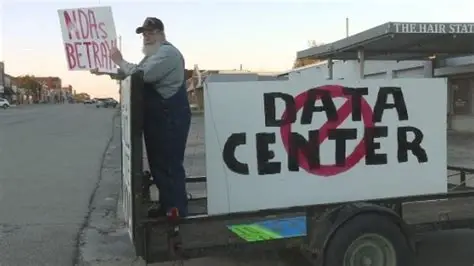
NEW BOSTON, Texas — Ten residents used the public comment period at Monday's Bowie County Commissioners Court meeting to deliver one message: do something about data centers.
The speakers urged commissioners to use whatever regulatory authority the county has to address data center development, even though the sites in question sit in unincorporated rural areas — where Texas counties famously lack zoning power. The residents' argument, in essence: limited authority is not the same as no authority.
The comments come amid organized local opposition to a project taking shape outside Leary and Red Lick, where a land company sold roughly 600 acres in March to Black Mountain Power LLC, a developer of large-scale data centers with projects in San Antonio, Fort Worth and Parker County. Details of the development remain scarce — the sale was accompanied by non-disclosure agreements — and the site sits adjacent to two creeks, including Barkman Creek, which flows through a residential area. Opponents, organized under the banner Citizens Against AI Data Centers, say no studies have been made public on the project's groundwater, environmental or health impacts.
Water is a recurring thread. At the same Monday meeting, commissioners unanimously approved a resolution supporting a proposed multi-county regional groundwater conservation district — and Texas currently does not require data centers to disclose how much water they use or plan to use. When state lawmakers directed the Public Utility Commission to survey the industry this year, most companies didn't respond.
The state's posture is shifting quickly. Gov. Greg Abbott, after years of recruiting data centers to Texas, has ordered the PUC to require data centers to pay all of their own electric infrastructure costs so residential ratepayers aren't stuck with the bill, and has said the industry's state tax break should end. Notably for Bowie County, those ERCOT-focused directives don't map neatly here: the county sits on the Southwest Power Pool grid, served by SWEPCO and rural cooperatives — though statewide legislation on water use, setbacks and disclosure would apply regardless of grid.
Whether commissioners act, and what tools they conclude they actually have, remains the open question.