
Texarkana's Wildest Radio Station!
Texarkana's Wildest Radio Station!
August 2, 2026
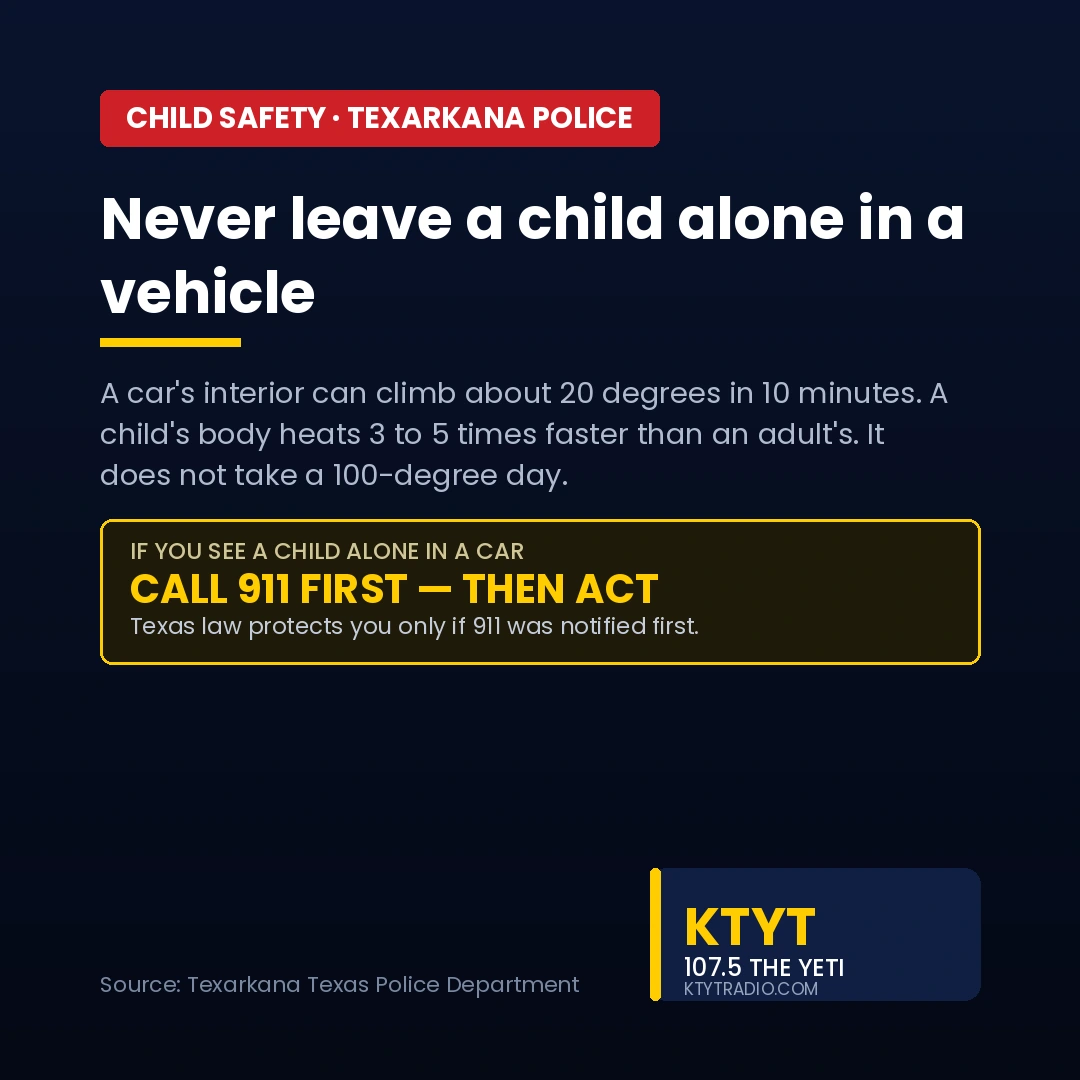
TEXARKANA, Texas — The Texarkana Texas Police Department is urging drivers not to leave children alone in vehicles, even briefly, following the death of a 2-year-old in Midland last week.
Midland police say the toddler was found unresponsive in a locked, non-running car on July 26 and later died at a hospital. Her father has been charged with capital murder. He has not been convicted and is presumed innocent.
According to NoHeatStroke.org, which tracks pediatric vehicular heatstroke nationally, Texas recorded 155 such deaths from 1998 through 2025 — more than any other state. The Midland death was the state's first of 2026, bringing the total to 156. Nationally, the organization counts 1,061 children killed in hot cars since 1998.
Kids and Car Safety listed the Midland case as the 15th child hot car death in the United States this year. A 7-month-old died in Vernal, Utah, two days later.
How fast it happens
A vehicle's interior can climb roughly 20 degrees in the first 10 minutes, and continue rising well beyond that. Cracking the windows does not meaningfully slow it.
Children are far more vulnerable than adults. Their body temperature rises three to five times faster. Heatstroke can begin when core body temperature reaches about 104 degrees, and 107 degrees or higher can be fatal.
That math does not require an extreme day. National Weather Service forecasts show Texarkana highs in the low to mid-90s this week, reaching about 97 degrees Wednesday and Thursday. A vehicle sitting in mid-90s heat can still reach lethal interior temperatures within minutes. Children have died in hot cars on days in the 70s.
If you see a child alone in a vehicle
Call 911 first. Under Texas Civil Practice and Remedies Code Chapter 92A, a person who forces entry into a vehicle to remove a child younger than seven — or another individual substantially unable to protect themselves — is immune from civil liability for the damage, but only if certain conditions are met.
Those conditions include determining the vehicle is locked or there is no reasonable way for the person to get out, holding a good faith and reasonable belief that entry is necessary to prevent imminent harm, ensuring law enforcement or 911 has been notified before entering, using no more force than necessary, and staying with the child in a safe location near the vehicle until an officer or first responder arrives.
The sequence matters. Making the call before forcing entry is one of the statutory conditions.
Preventing it in the first place
The National Highway Traffic Safety Administration recommends checking the entire vehicle before walking away, every time, even when no child is expected to be aboard. Placing a phone, bag, work badge or briefcase in the back seat creates a reason to open the rear door. Caregivers can also ask a daycare to call immediately if a child does not arrive as expected.